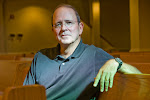

Well I turned in my keys and "Jody has left the building." I am stepping into the strange land of retirement. Where is the map?
I have been doing this thing called ministry for 45 years and am not sure what the sign on the road means. Is it a stop sign or a yield sign? My eyes try to focus. Maybe it is a "slow down sharp curve again."
This is just a heads up that now I have some time to do some writing and pondering. So I will add to my list to start blogging again. Ah, the future is out there and I will gently step toward what it holds.
Jody
Thursday, July 7, 2016

Monday, January 25, 2016
Saturday, January 23, 2016
After All These Years
I have been putting off retirement these past three years. Wayne Dyer once wrote, "When you are what you do when you don't you aren't." I must admit I have become what I do, but then what I do is so wonderful I have not minded that...until now.
So after 44 years of ministry I will take the next step and see what is out there. At a seminar I went to a few years ago when I thought I was going to retire sooner entitled ,"Finishing Strong, Ending Well," the leader said, "Do not ask what you are going to do when you retire. Ask rather who you will be." Quite frankly I am not sure I know the answer to that question.
I have loved sharing the gifts that God has given me in the work of ministry. I used to tell first year pastors in a program I helped lead called, "The Art of the Start," that if you chose ministry as a job then you are in the wrong "work" because ministry is not a job it is a life. Having said that I would then say to these idealistic-save the world for Jesus-newbies, "But you are responsible for carving out a life within that life for you and your family. If you do not do that you will get lost doing the "work" of ministry and you will not take care of yourself or your family."
I could say those words because in my younger years I did some of that. I gave myself to the work too much. O, I did a good job and was rewarded for it in many ways. But there were times I walked out on my family when I did not have to because of the "job." I learned the hard way not to do that.
Ministry is a scared journey. People allow you into parts of their lives where no one else can go. You are there at beginnings and at sometimes tragic endings. The raw materials of life are part of the ongoing work of being a pastor. You literally hold people's hearts and lives in your hands. It can be scary for sure and as a young pastor I was frightened that I would not measure up.
I thought I had to have answers for questions that seemed to have no answers. I figured I had to be some kind of strong to overcome the vulnerability and pain that I often had to walk into. Then good old God whispered in my ear, "Just be there and help them know I am there with them and you. No need to answer questions. Hold on to them and I will hold on to you."
And that is why I believe in God. It is not all the education and the experience. I believe because I have felt the unseen, powerful presence of a God who is beneath our questions and who holds us up when life lets us down.
I wish I had kept a count of how many babies I have baptized, how many youth I have confirmed, how many funerals I have conducted, how many sermons I have preached; but alas I am not a record keeper. But I know of one who has kept a kind of record. The one who called out to a seventeen year old boy one night and literally held his hands out to me and asked me to be a minister has known of all those experiences because he was there...and that is what matters.
So now it is time to take one last trip toward a land that seems to be a strange land but I shall step toward that place trusting the one who has lead me for all these years. "All will be well," I hear him whisper. For sure Jesus knows I sometimes have trouble trusting. I thought years ago I would have to get out of the ministry because of my struggle with trust, but then the one who called my name simply said, "Give it up. I knew who you were when I called you and I know who you are now. I know you have doubts and struggles but I know what I am doing...I am not stupid...be yourself and you will be able to especially help others who are struggling."
And that has been my gift; to stand with those who ask questions and let them know it is OK . To assure them that the doubts and questions are in fact a part of the journey. My latest book just published has always been "in" me. I was reluctant to write it before I retired but decided to risk it. It has been a joy to hear people tell me how reassuring it was for them. (The Christian Skeptic: Caught Between Belief and Doubt)
I am so thankful to have been a part of so many people's lives. I am so grateful to have had the high
privilege of standing in front of people to offer words about and "old, old story" that is alive and far reaching. Not many ministers get to serve the kinds of churches I have been fortunate enough to serve. What a journey it has been. Thank you Jesus for calling that seventeen year old boy and not giving up on him when he doubted. You knew what you were doing when I did not.
Now it is time for the next step...and yes I have some trust issues...what's new, huh.
So after 44 years of ministry I will take the next step and see what is out there. At a seminar I went to a few years ago when I thought I was going to retire sooner entitled ,"Finishing Strong, Ending Well," the leader said, "Do not ask what you are going to do when you retire. Ask rather who you will be." Quite frankly I am not sure I know the answer to that question.
I have loved sharing the gifts that God has given me in the work of ministry. I used to tell first year pastors in a program I helped lead called, "The Art of the Start," that if you chose ministry as a job then you are in the wrong "work" because ministry is not a job it is a life. Having said that I would then say to these idealistic-save the world for Jesus-newbies, "But you are responsible for carving out a life within that life for you and your family. If you do not do that you will get lost doing the "work" of ministry and you will not take care of yourself or your family."
I could say those words because in my younger years I did some of that. I gave myself to the work too much. O, I did a good job and was rewarded for it in many ways. But there were times I walked out on my family when I did not have to because of the "job." I learned the hard way not to do that.
Ministry is a scared journey. People allow you into parts of their lives where no one else can go. You are there at beginnings and at sometimes tragic endings. The raw materials of life are part of the ongoing work of being a pastor. You literally hold people's hearts and lives in your hands. It can be scary for sure and as a young pastor I was frightened that I would not measure up.
I thought I had to have answers for questions that seemed to have no answers. I figured I had to be some kind of strong to overcome the vulnerability and pain that I often had to walk into. Then good old God whispered in my ear, "Just be there and help them know I am there with them and you. No need to answer questions. Hold on to them and I will hold on to you."
And that is why I believe in God. It is not all the education and the experience. I believe because I have felt the unseen, powerful presence of a God who is beneath our questions and who holds us up when life lets us down.
I wish I had kept a count of how many babies I have baptized, how many youth I have confirmed, how many funerals I have conducted, how many sermons I have preached; but alas I am not a record keeper. But I know of one who has kept a kind of record. The one who called out to a seventeen year old boy one night and literally held his hands out to me and asked me to be a minister has known of all those experiences because he was there...and that is what matters.
So now it is time to take one last trip toward a land that seems to be a strange land but I shall step toward that place trusting the one who has lead me for all these years. "All will be well," I hear him whisper. For sure Jesus knows I sometimes have trouble trusting. I thought years ago I would have to get out of the ministry because of my struggle with trust, but then the one who called my name simply said, "Give it up. I knew who you were when I called you and I know who you are now. I know you have doubts and struggles but I know what I am doing...I am not stupid...be yourself and you will be able to especially help others who are struggling."
And that has been my gift; to stand with those who ask questions and let them know it is OK . To assure them that the doubts and questions are in fact a part of the journey. My latest book just published has always been "in" me. I was reluctant to write it before I retired but decided to risk it. It has been a joy to hear people tell me how reassuring it was for them. (The Christian Skeptic: Caught Between Belief and Doubt)
I am so thankful to have been a part of so many people's lives. I am so grateful to have had the high
privilege of standing in front of people to offer words about and "old, old story" that is alive and far reaching. Not many ministers get to serve the kinds of churches I have been fortunate enough to serve. What a journey it has been. Thank you Jesus for calling that seventeen year old boy and not giving up on him when he doubted. You knew what you were doing when I did not.
Now it is time for the next step...and yes I have some trust issues...what's new, huh.
Saturday, June 27, 2015
I
was not in my church this past Sunday to share my broken heart over what
happened in Charleston so I want to offer something now. I thought of something I wrote years ago in
my first book. I opened the book and
read my own words. I want offer them to
you as a way of expressing what really can’t be expressed:
Colored Water
“Colored” read the sign above the fountain whose
water I had drunk.
Would I be sick from drinking “colored” water?
For I was a “white only”
though but a child.
I asked a big person,
but my mistaken drink was washed away with
words.
So I waited to see if I would turn ill,
or perhaps “colored”
for no one would say.
There was only laughter at my childish question
and the strange word “nigger” tossed about
like a toy-
some strange enjoyment I did not understand.
Now I am a “big person” with no signs to read above
fountains.
And my children wonder when I tell them the
colored water story,
For they do not understand how water could
make people sick
The signs may be gone that read “colored…and
white only” but it seems the sickness lingers.
O God, shower us with healing water.
May your son touch our eyes and make us truly color blind.
All I know is that I want us all to
work harder to make sure that the water we all drink does not make our souls
sick. Let us recommit ourselves to work
for justice for all people.
Jody
Thursday, January 29, 2015
Sermon I preached on human sexuality in our Crucial Conversation Series
Sermon
012515
The
Law of Love Can Save Us
Romans
13: 8-10
Well this is going to be the easiest
or hardest sermon I have ever preached.
Let’s try the easy version first:
Treat everyone with the
kindness you would like to receive. Love everybody
Follow Jesus
and welcome those whom he would welcome.
(then
I sit down)
(Then I get back up)
Ok now comes the hard version. According to the criteria Steve laid out last
week as he introduced our Crucial Conversations sermon series a crucial
conversation has three elements:
opposing opinions, strong emotions, and high stakes.
To say that those elements are
present in the conversation about human sexuality including the issue of
homosexuality is an understatement. I
have already heard from a number of you and I haven’t even got to the subject
yet.
Let me tell you something about a
sermon first. A sermon is not supposed
to be just my opinion nor is it to share my strong emotions that I may have on
this subject. And you can bet that I am
not stupid when it comes to the reality that for a least some of you the stakes
are high.
I could, because I can, share with
you simply my opinion on this issue. If
you have listened to me for these past 12 years you probably already surmise
what it is. But what kind of sermon can
I preach that will not just be my view?
I have struggled with this sermon
and read more material than for any sermon I have ever preached. I want to be everyone’s pastor and I want to
offer Christ to all. I learned long ago
to preach the real gospel requires relinquishing the need I have for everyone
to like me or agree with me.
So here goes: Let me first start with a poem that means a
lot to me:
The Place Where We Are Right
by Yehuda Amichai
From the place where we are right
Flowers will never grow
In the spring.
Flowers will never grow
In the spring.
The place where we are right
Is hard and trampled
Like a yard.
Is hard and trampled
Like a yard.
But doubts and loves
Dig up the world
Like a mole, a plow.
And a whisper will be heard in the place
Where the ruined
House once stood.
Dig up the world
Like a mole, a plow.
And a whisper will be heard in the place
Where the ruined
House once stood.
Whether
it should be or not this issue for some is a kind of watershed. I will tell you that I learned this week from
all my reading that I did from all sides of this debate that there are good,
well meaning Christians on both sides of this discussion.
Some
think that this issue will cause the United Methodist Church to divide. I am reminded that often when I type the
words “United Methodist Church,” I instead type “untied” instead of
“united.” Up until recently I thought
that was just a typo. Are we going to
come untied because of this?
If
so it will break my heart. As I came up
with the sermon title for today I started to put it in the form of a question;
“Can the Law of Love Save Us?” I hope
that what I instead came up with can be true; The Law of Love Can Save Us.
The
same man who wrote some of those verses that are often use to support the view
that homosexuality is not God’s will for people is the same man who wrote the
verses I am using today. Paul says
clearly that all the commandments are summed up in one word: “You shall love your neighbor as
yourself…Love does no wrong to a neighbor; therefore love is the fulfilling of
the law.”
The
law of love can save us. Can we disagree
and still love enough to stay in the same church while realizing that we may
never agree fully on this issue? Real
love is not a feeling. In the old
version of the bible that was written in Latin love was translated as
“charity.” Charity has come to mean
something different in our culture but its real meaning is “to relate to other
people with genuine heartfelt care and compassion.”
Karl
Barth, an imminent biblical scholar once wrote that, “Love of one another ought
to be undertaken as a protest against the course of this world.” Can we allow the law of real love to save us
from dividing the church of Jesus Christ?
If we go the way of the world we just might divide over this.
If
we do we will announce to a generation under 40, many of whom think we should
be over this issue and see the church as a judgmental club that excludes gay
and lesbian people, that we can’t handle dissonance within our ranks. They will see us as a group of people who
want to be right even though the place where we take our stand is the earlier
poem sates is “hard and trampled like a yard.”
We
will I fear end up being like that ruined house the poem refers to. I believe the law of love can save us.
As
I was reading and praying over this sermon I went to see the movie “The
Imitation Game.” The movie is about Alan
Turing who was responsible for breaking the Enigma Code that Germany used in
WWII. It is estimated that by doing this
he may have shorted the war by two years and saved as many as 14 million lives.
Yet
later he was convicted in Britain of homosexual crimes and given the choice to
go to prison or take hormonal treatments to change his sexual status. After a year of the treatments he took his
own life.
Knowing
that I would be preaching this sermon as sat there at the end of the movie when
those words came across the screen my eyes filled with tears. How could we as a people do this to one of
God’s children?
I
work with people all the time who deal with shame. I tell them that guilt is about what you
do. Guilt can be good if it motivates us
to improve. But shame is not about what
we do it is about who we are.
Shame
has driven many persons who have same sex attractions to places of deep
darkness. I have never met a person who
is gay or lesbian who told me that they chose to be who they are.
Does
anyone in this room know why you are the kind of sexual being you are? I do not.
It is a mystery. Many studies
have been done about how we came to be the kind of sexual person we are. It seems after my reading this week that both
sides of this conversation find the studies that will support their point of
view about the origins of our human sexuality.
So
I want this to be a sermon and not a lecture but I need to lay out what I see
as the reason for the divide we have not only in the church but in the larger
culture. The two big doors through which
people walk through when it comes to understanding human sexuality are the
bible and what it means to be made in the image of God.
Let’s
do the bible first although they both relate.
There are five references to what we call homosexuality in the
scriptures. Many biblical scholars think
that the practices referred to cannot be equated with today’s understanding of
homosexuality. Some of them refer to
perversions related to sexual power issues.
I
am not going to go into the details because this is not the forum to do so nor
do I have the time. The bible is clearly
negative in its stance about these practices but scholars disagree as to the
nature of those acts as compared to the reality today of two people with same
sex attraction who are in a committed long term relationship. Those kinds of long term committed relationship
are simply not mentioned in our scriptures.
One
person I read this week took exception to the elevation of the need for
hospitality in the church that welcomes all.
He stated that hospitality does not trump the need for holiness. The issue is what Christians say are the
criteria for holiness.
Those
few verses are used to bolster what it means to be unholy. Part of this crucial conversation comes back
to what is the bible.
I
have told you before that the bible should not be viewed as a brick. A brick is created by mixing a substance
together and pouring it into a mold to make a brick. The bible is not made of the same
substance. It contains poetry, allegory,
history, law, even short stories.
The
bible is more like a quilt put together over years by a grandmother who has
saved various patches from years past that represent her family. The quilt is hand sown so is not even like a
machine might make it. Some of the
patches require interpretation of the story behind the reason the patch is
incorporated into the quilt.
No
one liked Uncle Frank but his patch was put into it because he was part of the
family and his story is part of the family narrative. The quilt was created to tell the family
story.
Adam
Hamilton, the pastor or the largest Methodist Church in America, and a prolific
writer, has wrestled with this issue when it comes to the bible and offers a
view similar to my image.
Hamilton
states that when we read and interpret scripture there are three broad
categories that could be thought of as buckets into which we can place those
scriptures. The biggest bucket is one
that could be labeled those that reflect the timeless will of God for human
beings; like Love your neighbor as yourself.”
The
second bucket could for those passages that reflect God’s will in a particular
time but not for all time including much of the ritual law of the Old
Testament. The third bucket are passages
that reflect the culture and historical circumstances in which they were
written but never reflected God’s timeless will like those related to slavery.
So
where would the question of loving and committed relationships between same sex
people be put. Hamilton states from his
experience in the church that conservatives on this issue believe they fit into
the first bucket which reflects God’s timeless will. Those who are sometimes called moderates or
progressive believe they fit into the second of more likely the third bucket.
I
wonder can we in the United Methodist church stay together while disagreeing
about our buckets. Can the law of love
save us?
Another
door to walk through is what does it mean to be created in the image of
God. My friends, and they are friends,
in the clergy who consider themselves true conservatives say that to be created
in the image of God means that we are created male and female for each
other. To differ in the attraction that
ends up being called homosexual is to diverge from God’s intended natural
order.
Others
point to a reality that human sexuality is gift from God and if that is true if
a person ends up being a person who feels that he or she should be with a
person like them rather than different from them then this is part of God’s
natural order.
In
terms of both the bible and what it means to be made in the image of God noted biblical
scholar Walter Brueggemann was asked about this issue. Here is how he responded:
The discussion needs to start with what it
means to be made in the image of God. The confession of Christian faith is that
all of God’s human creatures are made in the image of God. That means that they
are to be treated with dignity, offered maintenance and security, as is
necessary. There’s almost no use arguing over biblical text.
The only thing that will change people’s minds
about this is getting to know people who happen to be gay or lesbian or
bisexual, and what you discover is that they’re people just like us. To
overcome our fears, I think it is basically fear, means getting to know people
and to see that they are not a threat. There may be people with those sexual
differences whom we like or whom we don’t like, but they’re all made in the
image of God. To stereotype them negatively, it seems to me, is a complete
misunderstanding of Christian faith.
I know those texts are in the Bible, but the
Bible is a dynamic tradition that’s always on the move to new truth. If you
track that out, probably the ultimate statement about that is made by Paul in
Galatians 3, that in Christ there is neither male nor female, Greek nor
Barbarian, slave or free. We are all one in Christ. And what we know in the
gospel is that God’s love reaches toward all of God’s creatures. To sort them
out in terms of who are the deserving and the qualified and who are not is
imposing a judgment on human reality that simply cannot be done.
But some Christians fear disobeying God when
it comes to LGBTQ issues. Because of what the Bible says, they fear that they
are compromising the gospel.
Well, what we do is to pick and choose things
out of the Bible that conform to our fears. It’s not a matter of obeying the
Bible — it’s about obeying the gospel. The gospel is about God’s saving love
that wants to restore all of humanity to full communion. To reach back to an
ancient text that has now been corrected by the revelation of God in Jesus
Christ is simply a bad maneuver and poor methodology and theologically
irresponsible. Those texts are not the determinative texts.
The texts that are determinative are those that talk about the
love of God that has been shown to us in Jesus. We can’t compromise that.
It
is true that in the bible marriage is defined as between a man and a
woman. The bible though does not deal
with the reality of two committed people who are of the same sex.
People
who walk through those two doors of scripture and image of God walk through the
doors but end up with differing views.
Can the law of love save us?
The
United Methodist Church did a study in 1994.
After much biblical study and talking with human sexuality professionals
and many people both gay and straight they published their findings. I want to share some of what they offered to
the people called Methodist.
Things the Church
Can Responsibly Teach In order to bring the results of our study into sharper focus, it may help to summarize our conclusions about some of the specific points we believe the church can responsibly teach on the subject of homosexuality.
Homosexuality is best considered in the context of a more general Christian understanding of human sexuality.
Human sexuality is God's good gift. Our fundamental attitude toward this gift should be more one of gratitude than of apprehension.
In the expression of our sexuality-as in the expression of all aspects of our existence, we are invited by God's grace to a life of love and self-discipline.
Sexual expression is most profoundly human when it takes place in the context of a caring and committed relationship where each partner can be an expression of God's grace for the other.
There are substantial numbers of persons of homosexual orientation within the church whose gifts and graces manifest the work of the Spirit among us.
The specific causes of homosexual orientation remain unclear, although various scientific theories about this contribute to our overall understanding.
It is a responsible expression of Christian ethics to advocate for those things that minimize the spread of sexually transmitted diseases and to support work toward adequate health care and research in these areas.
The basic human rights of gay and lesbian persons should be protected by the church, and the general stigmatizing of such persons is inappropriate in a church that understands all its members to be sinners who live by the power of God's grace. - In the church's own dialogue on this as well as other controversial issues, persons of conflicting viewpoint should respect one another, recognizing that before the mystery of God, our knowledge and insight remain partial and imperfect.
Things the Church Cannot Responsibly Teach
In the course of its study, the Committee has noted that advocates of various sides of the debate sometimes use arguments that ultimately cannot be supported. It may be helpful to review some of these:
The church cannot teach that the Bible is indifferent to homosexual acts. Although there are only a few passages where such are in view, in every one of those passages a negative judgment about homosexual practice is either stated or presumed.
The church cannot teach that all biblical references and allusions to sexual practices are binding today just because they are in the Bible. Specific references and allusions must be examined in light of the basic biblical witness and their respective sociocultural contexts.
The church cannot teach that certain sexual behaviors are morally acceptable just because they are practiced by substantial numbers of people, nor just because it corresponds to their subjective inclinations. Not all expressions of sexuality can be affirmed by the church as moral or life-enhancing. The basis of moral judgments among Christians is deeper than statistical headcounts or subjective feelings-even though statistical studies and subjective reports can be an important part of the process of forming moral judgments. This applies to both heterosexual and homosexual practices.
The church cannot teach that gay and lesbian persons are generally dysfunctional or characteristically preoccupied with sex-some are and some are not, just like their heterosexual counterparts.
The church cannot teach that gay and lesbian persons are prone to seduce or corrupt others-some are and some are not, again, just like their heterosexual counterparts.
The church cannot teach that the same percentage of every society is gay or lesbian. That is not borne out in the limited reputable cross-cultural studies. It does appear that homosexual relations exist in some form in all cultures studied.
The church cannot teach that sexual orientation is fixed before birth, nor can it teach that it is fixed only after birth. The scientific evidence is insufficient to allow a judgment either way, particularly considering the diverse types of both heterosexuality and homosexuality.
The church cannot teach that sexual orientation, either heterosexual or homosexual, is deliberately chosen. It is clear that substantial numbers of persons have experienced their sexual orientation from early childhood.
The church cannot teach that there is a single theory of homosexual orientation or behavior or, for that matter, of heterosexual orientation or behavior. No one theory is sufficiently supported by empirical evidence to be taught as generally accepted truth.
The church cannot affirm any sexual practice, heterosexual or homosexual, that is exploitative, casual, or physically threatening.
So
here we are. Our United Methodist by
line is as follows: Open Minds, Open
Hearts, Open Doors: The People of the
United Methodist Church. Will that be
true? Or we will be become the “untied”
Methodist Church?
The
law of love can save us. We do not have
to agree but we do have to love. I want
to serve a church where people do not have to hide in shame. I want to serve a church that knows that we
are all sinners in need of grace. I want
to serve a church where everyone is welcome and loved as children of God. I want to serve a church where people of
faith can disagree without being disagreeable.
People
are still getting over Pope Francis’ response when he was asked about his
issue. He smiled and said, “Who am I to
judge.” I heard one person respond,
“Well you’re the Pope for Christ’s sake.”
Ah yes…ah yes…for Christ’s sake.
So
we’ve heard from the Pope about the law of love.
What
would Jesus do?
I
have tried to lift up in this sermon that people of faith see this issue from
different perspectives. Can we respect
each others perspectives and stay united in love? God is a God of infinite variety. So let me close this most difficult sermon
with the one I preached first:
Treat everyone with the kindness
you would like to receive. Love everybody
Follow Jesus
and welcome those whom he would welcome.
Subscribe to:
Posts (Atom)